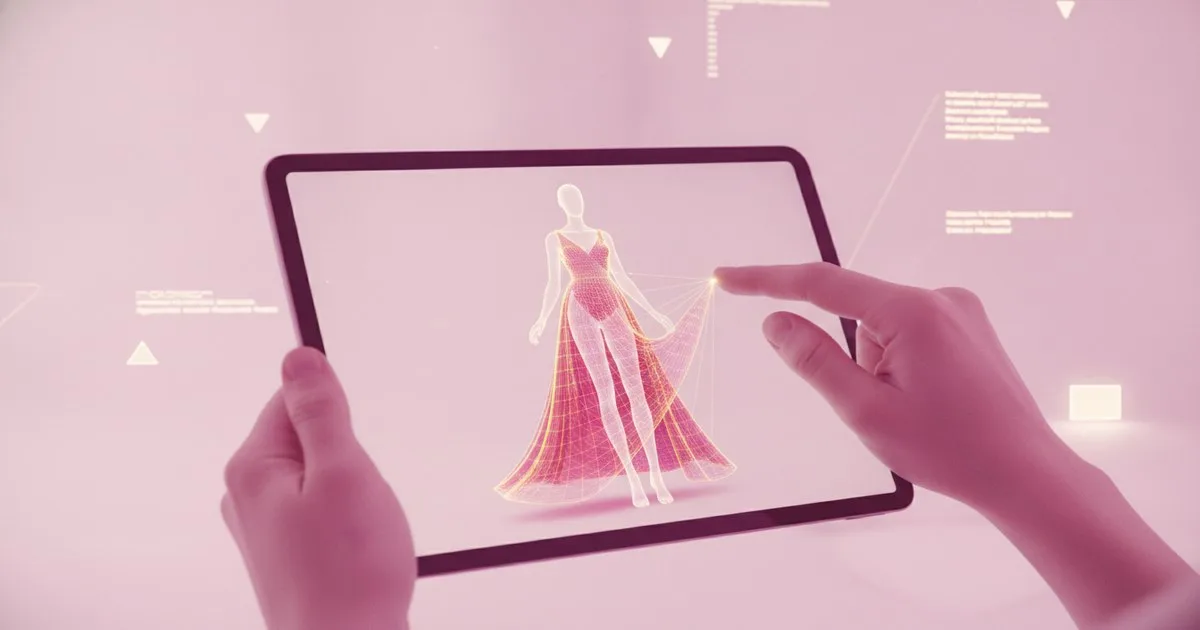
The acquisition of Fit Analytics by Snap Inc. in 2021 transformed a leading B2B size-recommendation tool into a foundational pillar of social-driven augmented reality (AR) commerce. While the core technology continues to serve global retailers, its strategic priority shifted from independent growth to powering a proprietary ecosystem where virtual try-ons and data-led garment mapping reduce the friction of digital fashion discovery. For founders, this transition illustrates the trade-off between scaling as a horizontal industry standard and becoming a vertical engine for a platform’s specific hardware and software ambitions.
Key takeaways
- Strategic Integration: The acquisition moved Fit Analytics from a standalone e-commerce plugin to a core component of a broader AR Shopping suite.
- Data Moat Valuation: The primary value of the exit lay in the massive dataset of body measurements and garment specifications, which now fuels machine learning for virtual try-ons.
- B2B Continuity: Maintaining external retail partnerships remains a priority to keep the data engine fed, even as the product roadmap aligns with the parent company's goals.
- The "Agent" Shift: Modern fashion tech is moving toward an "agent layer" approach, where platforms like Vibe IQ orchestrate data across the entire product lifecycle rather than just the point of sale.
- Exit Realities: Founders must weigh the immediate liquidity of an exit against the potential loss of a product's original, industry-wide neutral positioning.
What happened to the Fit Analytics product after the deal closed?
When you look at the trajectory of Fit Analytics post-acquisition, the most immediate change wasn't a disappearance from the market, but a massive expansion in technical scope. Before the deal, the company was primarily known for its "Fit Finder"—a survey-based tool that asked users for their height, weight, and age to suggest a size.
Post-acquisition, the technology was folded into a comprehensive AR Shopping suite. This meant the machine learning models that previously only predicted a size label (e.g., "Large") began to power the spatial mapping required for virtual try-on. By combining garment dimensions with user-provided data, the parent company could project how a piece of clothing would realistically drape over a specific body type in a 3D environment.
This shift highlights a common pattern in fashion-tech exits: the technology is often "de-coupled" from its original interface and re-coupled to the acquirer’s high-growth projects. For Fit Analytics, this meant moving from a simple web widget to a sophisticated backend for camera-led commerce. If you are building a tool in this space, you should consider whether your technology is an end-product or a data-rich component that could power a larger platform's future features.
How did the acquisition change the relationship with existing retail partners?
One of the biggest risks in a tech acquisition is the "platform conflict." When a social media giant buys a tool used by thousands of brands, those brands may worry about data privacy and competitive advantage. However, the outcome for Fit Analytics has largely been one of continuity.
To maintain the accuracy of its recommendation engine, the tool needs a constant stream of return data and purchase history from a wide variety of retailers. If the parent company had shut down external access, the algorithm would have eventually stagnated. Instead, they maintained the B2B service, allowing brands to continue using the Fit Finder while the parent company benefited from the aggregate data to refine its AR models.
This "co-opetition" model is increasingly common. Retailers are willing to share data with a platform-owned tool if it significantly lowers their return rates—a major pain point in the industry. As seen in other sectors, such as the recent SpaceX acquisition of Cursor (August 15, 2026), the goal is often to secure the talent and the core IP while allowing the existing ecosystem to function as a data laboratory.
Why did the acquirer prioritize a fit recommendation engine over other fashion tech?
You have to look at the math of digital fashion to understand the priority. Returns are the single greatest drain on e-commerce margins, and "incorrect fit" is cited as the reason for over 70% of those returns. For a company trying to convince users to buy clothes through a camera lens, solving fit is not a luxury; it is a prerequisite.
By acquiring Fit Analytics, the parent company didn't just get a tool; they got a "data moat." They acquired years of historical data on how specific brands fit compared to others. This is information that is nearly impossible to replicate from scratch. While other startups were focusing on aesthetic design or trend forecasting, Fit Analytics focused on the boring, difficult, and highly valuable problem of sizing.
This focus on high-utility, high-pain-point problems is a hallmark of successful exits. In our analysis of 6 Fashion-Tech Startups That Rebuilt Around a Niche and Survived, we see that those who solve specific operational bottlenecks—like sizing or inventory accuracy—tend to have more stable outcomes than those chasing purely aesthetic AI trends.
How does Fit Analytics compare to the new "Agent Layer" platforms?
As we move into 2026, the landscape of fashion technology is shifting from point-solutions (like a single fit widget) to integrated platforms. While Fit Analytics focuses on the consumer-facing side of the equation, companies like Vibe IQ are attacking the problem from the production side.
Vibe IQ acts as an "agent layer," a product creation platform that orchestrates data between design, development, and retail. The difference in approach is significant for founders to understand:
- Fit Analytics is a downstream solution: It helps sell what has already been made by predicting fit for the consumer.
- Vibe IQ is an upstream and midstream solution: It ensures that the product data is accurate and collaborative from the moment of conception, reducing the likelihood of fit issues before the garment even reaches the warehouse.
| What it is | Fit Analytics (Post-Acquisition) | Vibe IQ |
|---|---|---|
| Best For | E-commerce conversion and AR try-on. | Product orchestration and team collaboration. |
| Core Tech | Machine learning based on consumer surveys and garment specs. | Agent-led platform connecting PLM, ERP, and 3D tools. |
| Primary User | The end shopper on a retail site or social app. | The brand's internal design and production teams. |
| Limits | Relies on user-reported data and existing garment sizing. | Requires integration into the brand's internal workflow. |
What can founders learn from this exit path?
If you are a founder weighing an acquisition, the Fit Analytics story offers a template for a "successful absorption." The founders stayed on to lead the integration, the office in Berlin remained a hub for innovation, and the product was not shuttered but rather supercharged with AR capabilities.
However, it also serves as a reminder that your original vision may be subsumed by the acquirer's broader strategy. Fit Analytics was once the neutral arbiter of fit for the whole internet; now, its most advanced features are designed to keep users within a specific social ecosystem.
When building your startup, consider the "integration debt" you are creating. Tools that are easy to plug into existing systems, like the PLM in Fashion: Choosing Between Centric, PTC, Backbone, and WFX models, are often more attractive to acquirers because they prove they can play well with others. Fit Analytics succeeded because it was both a great standalone product and a perfect piece of a larger puzzle.
What is still unsolved in the world of fit and sizing?
Despite the success of Fit Analytics and its integration into AR commerce, the industry has not "solved" fit. We still lack a universal sizing standard. A "Medium" in one brand remains a "Small" in another, and machine learning can only predict these discrepancies—it cannot fix the underlying lack of standardization.
Furthermore, the "sustainability tension" remains. As discussed in recent research on Startups and Innovation Ecosystems Driving Sustainable AI in Fashion Tech, there is a conflict between using AI to drive more consumption and using it to ensure that only the right products are manufactured. The next generation of fashion tech will likely need to move beyond just "recommending" and start influencing the actual On Running's Digital Sampling Approach: What the Filings Show to ensure garments are built correctly the first time.
FAQ
What exactly did Snap buy when they acquired Fit Analytics?
They acquired a proprietary database of millions of body profiles and garment measurements, a team of machine learning experts specialized in fashion, and a B2B revenue stream from existing retail partnerships. This data is now used to power AR virtual try-on features.
Can any brand still use Fit Analytics on their website?
Yes, Fit Analytics continues to operate as a B2B service. Brands can integrate the Fit Finder into their e-commerce sites to provide size recommendations, though the most advanced AR-driven features are often prioritized for the parent company's platform.
How does Fit Analytics reduce return rates?
By using a combination of user-provided data (height, weight, fit preference) and historical garment performance data, the tool predicts the most likely size for a customer. This reduces "bracket shopping," where customers buy multiple sizes of the same item intending to return most of them.
Is Fit Analytics the same as a 3D body scanner?
No. While 3D scanners use cameras to take exact measurements, Fit Analytics primarily uses a survey-based machine learning approach. However, since the acquisition, the technology has been integrated with AR camera tech to move closer to a visual measurement system.
Why is Vibe IQ mentioned as a comparison?
Vibe IQ represents the next evolution of fashion tech—the "agent layer." While Fit Analytics solves the fit problem at the point of sale, Vibe IQ helps brands organize their entire creation process so that fit, design, and production data are aligned from the start.
What is the future of fit technology in 2026?
The focus is shifting toward "predictive manufacturing" and immersive AR. Instead of just suggesting a size, the technology is starting to help brands create custom-fit garments or provide a high-fidelity virtual mirror experience that shows exactly how a fabric will move.
Further reading
- SpaceX officially closes its Cursor acquisition
- Startups and Innovation Ecosystems Driving Sustainable AI in Fashion Tech
- WFX
- Fit Analytics
- Vibe IQ