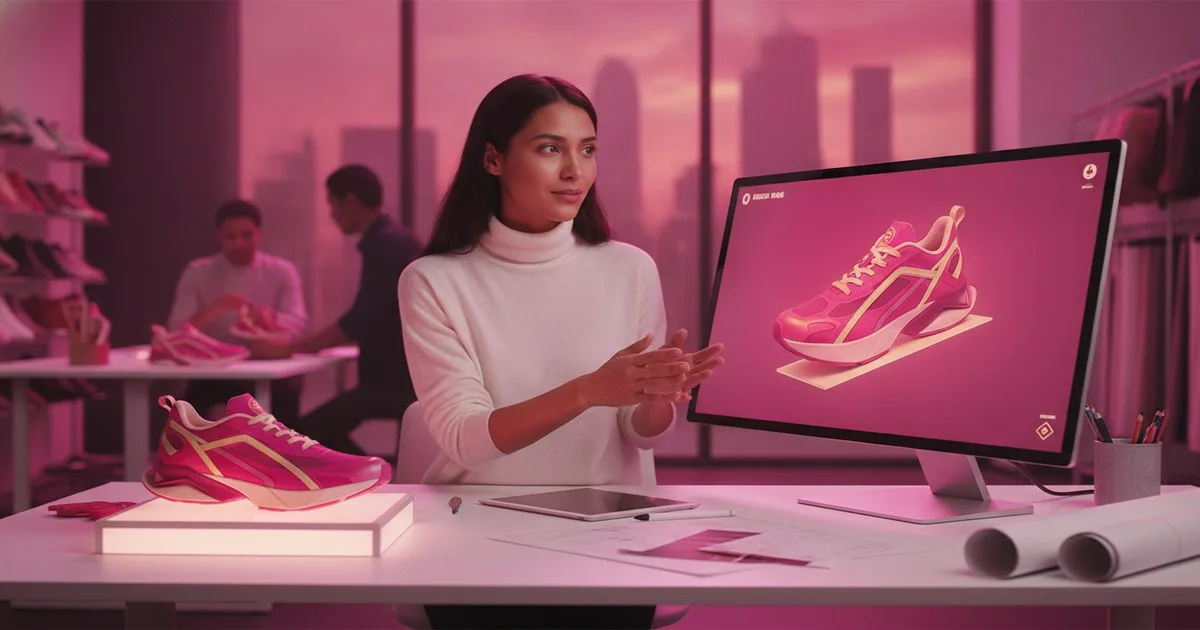
On utilizes 3D digital sampling to compress its product development cycles, moving from initial concept to athlete-tested prototype with significantly fewer physical iterations. By integrating high-fidelity digital twins early in the design phase, the brand reduces material waste and accelerates the feedback loop between its Zurich-based "On Labs" and global manufacturing partners. This digital-first strategy allows you to see how a high-performance brand maintains its competitive edge through technical precision and speed-to-market.
Key takeaways
- On leverages 3D simulation to reduce physical prototype requirements by up to 50% in specific development phases.
- The brand's innovation strategy focuses on "digital twins" that simulate material performance and footwear physics before a single mold is cast.
- Integration with tools like Browzwear enables seamless communication between design teams and production facilities.
- Digital sampling is a core pillar of On’s sustainability goals, directly lowering the carbon footprint associated with shipping physical samples.
- The transition to 3D requires a cultural shift in design teams, moving from tactile-first to data-informed decision-making.
How does On Running integrate 3D technology into its product creation?
You might look at a pair of On shoes and see the signature "Cloud" elements, but the journey of those shapes begins in a purely virtual environment. According to recent industry reports, including insights from the World Economic Forum (June 20, 2025), the collision of technology and creativity is defining the next era of performance wear. For On, this means the design process is no longer a linear path of sketch-to-sample.
Instead, the brand employs 3D visualization to build comprehensive digital models. These models aren't just visual representations; they are functional simulations. When you design a performance shoe, the interaction between the midsole foam and the upper material is critical. On uses digital tools to test these interactions virtually. This allows designers to adjust the geometry of the CloudTec® structures and immediately see how those changes affect the shoe's aesthetic and projected performance.
This approach is particularly evident in their "Lightning" program, which focuses on rapid prototyping for elite athletes. By using digital sampling, the team can iterate on a custom fit for a marathon runner in days rather than months. The digital files serve as a single source of truth that can be shared instantly with manufacturing partners, ensuring that the final physical product aligns perfectly with the digital intent.
What are the measurable benefits of digital sampling for a high-growth brand?
For a brand experiencing the rapid growth that On has seen since its IPO, scalability is the primary challenge. Traditional sampling is notoriously slow. You send a design to a factory, wait three weeks for a physical sample to arrive, realize the stitching is off, and repeat the process. This can happen five or six times for a single shoe model.
Digital sampling flips this script. By using 3D software to validate fit and style, brands can often eliminate two or three rounds of physical samples. This isn't just about saving the cost of the sample itself; it’s about the "opportunity cost" of time. In the competitive sportswear market, being first to a new trend or technical breakthrough is everything.
Reports in FashionUnited highlight that the industry is moving toward a model where the digital sample is the primary tool for sell-in and marketing, even before the physical production begins. For On, this means they can present upcoming collections to retail partners using high-quality 3D renders, allowing for better inventory planning and reducing the risk of overproduction.
How does On's innovation strategy differ from traditional sportswear giants?
While legacy brands often struggle with the "silo effect"—where design, engineering, and manufacturing speak different languages—On has built its infrastructure to be tech-native from the start. You see this in their "On Labs" environment, where the boundary between a software engineer and a footwear designer is blurred.
Their strategy isn't just about buying software; it’s about the data pipeline. When On develops a new material, the physical properties of that material are digitized and added to their library. This allows any designer in the company to pull that material into a 3D environment and know exactly how it will drape, stretch, and react under tension.
According to coverage in Sourcing Journal, this level of digital maturity is what allows smaller, agile players to compete with giants. Instead of relying on massive physical archives, On relies on a digital library that is accessible, searchable, and ready for 3D implementation at a moment's notice.
What can go wrong in the digital-to-physical workflow?
Despite the clear advantages, the path to a fully digital workflow is not without friction. One of the most common issues you will encounter is "haptic disconnect." A digital sample can look perfect on a 4K monitor, but it cannot yet replicate the exact "hand-feel" of a new recycled polyester or the specific compression of a new foam density. Designers who rely solely on digital tools may find that the first physical prototype feels different than expected, leading to late-stage corrections.
Furthermore, there is the challenge of hardware and software interoperability. If the design team uses one 3D tool and the factory uses another, data can be lost in translation. This is why many brands are standardizing on platforms that offer end-to-end integration. There is also the human element: experienced pattern makers and footwear technicians often have decades of "tactile knowledge" that is difficult to translate into a digital interface. Transitioning these experts into a 3D-first environment requires significant training and a shift in how success is measured.
Comparison of Sampling Methodologies
| Methodology | Best For | Limits |
|---|---|---|
| Traditional Physical Sampling | Final quality assurance and haptic (touch) testing. | High cost, slow turnaround, significant material waste. |
| 3D Digital Sampling | Rapid iteration, style validation, and global collaboration. | Requires high initial tech investment and specialized training. |
| Digital Twin Simulation | Performance testing (stress, strain, aerodynamics). | Computationally expensive; requires highly accurate material data. |
| Hybrid Approach | High-performance footwear and complex apparel. | Can lead to redundant work if digital and physical tracks aren't synced. |
The Role of 3D Tools in the Modern Design Room
To implement these strategies, you need a robust toolkit. Standard-bearers like VStitcher by Browzwear have become essential for brands looking to bridge the gap between 2D patterns and 3D forms. These tools allow for the creation of a "digital twin" that carries all the technical specifications needed for production, including the tech pack, bill of materials, and grading logic.
For a brand like On, the goal is to reach a point where the physical sample is merely a formality—a final check before the "green light" for mass production. This requires a level of trust in the digital output that only comes from years of calibrating digital simulations against physical results. As you look at the future of footwear, the brands that master this calibration will be the ones that can respond to athlete needs and market shifts with the most precision.
FAQ
How does digital sampling reduce a brand's carbon footprint?
Digital sampling eliminates the need to manufacture and air-freight multiple rounds of physical prototypes across the globe. By resolving design and fit issues in a virtual space, brands significantly reduce material waste and the CO2 emissions associated with international logistics during the development phase.
Can 3D samples be used for retail and marketing?
Yes. High-fidelity 3D renders are increasingly used in B2B wholesale platforms to sell collections to retailers before physical samples exist. This allows for earlier feedback on styles and more accurate production forecasting, further reducing the risk of unsold inventory.
What is a "digital twin" in footwear design?
A digital twin is a virtual 3D model that possesses the exact physical properties of its real-world counterpart. This includes weight, elasticity, and texture. In footwear, it allows designers to simulate how a shoe will perform under the stress of running before it is built.
Does digital sampling replace the need for physical prototypes entirely?
Not yet. While it can reduce the number of samples by 50-70%, a final physical prototype is almost always required for "wear testing"—ensuring the shoe performs correctly on a human foot in real-world conditions and that there are no unforeseen comfort issues.
What skills do designers need for a 3D-first workflow?
Designers now need a blend of traditional garment/footwear construction knowledge and technical proficiency in 3D modeling software. Understanding how 2D patterns translate into 3D shapes is crucial, as is the ability to interpret digital simulation data regarding material behavior.
How does On Running use digital tech for athlete-specific gear?
Through their "On Labs," the brand uses 3D scanning and digital modeling to create bespoke footwear for elite athletes. This allows them to iterate on specific performance needs—like traction patterns or plate stiffness—digitally, delivering a optimized physical shoe in a fraction of the traditional time.
Is digital sampling only for large enterprises?
While large brands have the capital to build integrated digital pipelines, the availability of cloud-based 3D tools is making digital sampling more accessible to startups. It allows smaller teams to present professional-grade designs and iterate quickly without the overhead of a large physical sampling room.
Further reading
- Digital fashion: Where technology, culture and creativity collide
- Company Profile: Browzwear — 3D Sampling's Longest-Running Bet