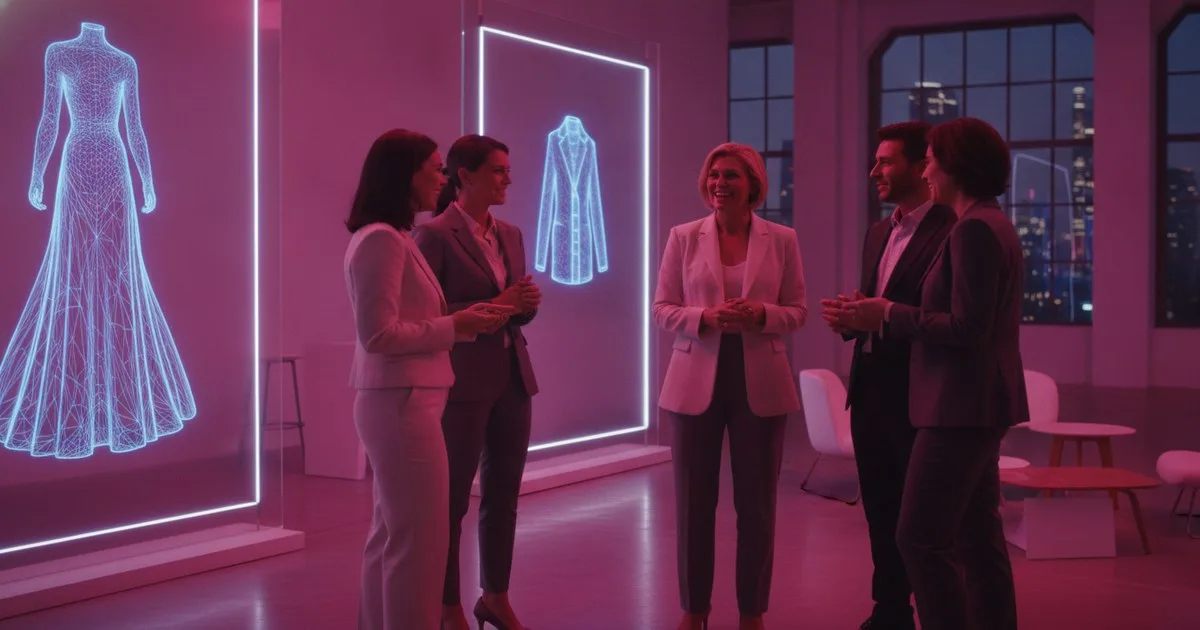
PI Apparel events function as the primary bridge between fashion product development teams and the technology providers building the next generation of design tools. You attend these summits to move beyond theoretical digital transformation and engage with peer-led case studies on 3D implementation, PLM integration, and supply chain transparency. These gatherings are less about the spectacle of a traditional trade show and more about solving the friction points that prevent a digital garment from becoming a physical reality.
Key takeaways
- Digital maturity varies significantly across the industry, making peer-to-peer benchmarking the most valuable session type for brands.
- The integration of gaming and cinematic technology into fashion workflows is a growing focus for West Coast events.
- Successful attendance requires a cross-functional team, as technology silos frequently lead to failed software implementations.
- Vendors gain the most value by presenting solved problems rather than abstract feature lists.
What is the core purpose of a PI Apparel event?
Since its inception in 2015, PI Apparel has positioned itself as a meeting ground where fashion visionaries meet technological mastery. Unlike broad retail conferences that focus on marketing or e-commerce, these events focus on the "engine room" of fashion: design, development, and manufacturing. The goal is to create a space where brands can discuss the messy reality of their tech stacks without the pressure of a hard sales environment.
The event structure typically revolves around four pillars: keynote presentations from major global brands, technical breakout sessions, focus groups, and a curated exhibition space. For a startup founder or a product leader, the value lies in the specific focus on the product lifecycle. You aren't just looking at a pretty 3D render; you are discussing how that render carries the metadata necessary for a factory in Vietnam to produce a physical sample.
How do brands use these summits to refine their tech strategy?
When you walk into a PI Apparel session, you are often looking for validation. Are other brands struggling with the same data silos? How did they convince their pattern makers to move from 2D to 3D? Brands often use these events to see how tools like Browzwear are being utilized in real-world production environments. For example, seeing how a company like JD PLC integrates 3D sampling into their workflow provides a blueprint that a PowerPoint deck cannot replicate.
Attendance allows your team to move beyond the "pilot purgatory" phase. Many brands find themselves stuck with a dozen software licenses that no one knows how to use effectively. By speaking with peers who have successfully scaled these tools, your team can identify the cultural shifts—not just the technical ones—needed to make the software stick. This often involves realizing that your internal data architecture needs a complete overhaul before a new PLM can function correctly.
Why is the focus shifting toward gaming and cinematic technology?
One of the most notable shifts in the upcoming PI Apparel West Coast 2025 is the explicit inclusion of gaming and cinematic technology. The industry is beginning to realize that the tools used to build immersive digital worlds in Hollywood are becoming increasingly relevant for creating digital twins in fashion. This crossover allows for more realistic fabric physics and lighting, which are essential for reducing the need for physical samples.
For vendors, this shift represents a broadening of the market. It is no longer enough to offer a basic CAD tool; you must show how your software interacts with real-time rendering engines and digital asset management systems. For brands, it means looking for talent in unconventional places, such as hiring technical artists from the gaming industry to lead their digital product creation (DPC) departments.
What do vendors gain from the exhibition floor?
For a fashion-tech vendor, the exhibition floor is a test of product-market fit. Because the audience is highly technical—often consisting of PLM managers, 3D leads, and CTOs—the feedback is immediate and specific. You aren't just scanning badges; you are defending your roadmap.
Vendors often use these events to announce new integrations. For instance, a brand might be looking for how Centric PLM, part of Dassault Systèmes, connects with their existing 3D tools to create a single source of truth for their product data. If you are a vendor, being able to demonstrate these connections in a live environment is more effective than any white paper. It also provides a chance to see where the "white space" in the market is—what are brands asking for that no one is currently providing?
Comparison of PI Apparel Session Types
| Activity | Best For | Potential Limits |
|---|---|---|
| Keynote Case Study | Understanding high-level strategy and ROI. | Can sometimes gloss over the daily technical struggles. |
| Focus Groups | Solving specific, niche technical bottlenecks with peers. | Requires high levels of transparency from participants. |
| Tech Demonstrations | Evaluating the UI/UX and feature sets of new software. | Demos are often performed in "perfect" data environments. |
| Networking Breaks | Building long-term partnerships and honest vendor vetting. | Can be physically draining over a two-day period. |
What are the common pitfalls when attending these events?
The most common mistake brands make is sending only their IT department or only their design leads. Digital transformation in fashion is a cross-functional challenge. If the designers love a tool but the sourcing team can't use the data it produces, the investment is wasted. You should aim to send a "triad" of representatives: one from design, one from sourcing/production, and one from IT.
Another pitfall is the failure to follow up on the "unsolved" problems discussed in focus groups. It is easy to get caught up in the excitement of a new tool at the PI Apparel New York 2025 summit, but the real work begins when you return to the office and try to map that tool to your existing, often messy, internal processes. Without a clear plan for implementation, the insights gained at the event will likely evaporate within a month.
How should you prepare for the 2026 circuit?
Looking ahead to events like the Fashion Technology Show in New York 2026, preparation should start with an internal audit. What are your current lead times? Where is the data getting lost? By entering the event with a specific list of pain points, you can navigate the exhibition floor with much higher efficiency.
For startups, the 2026 circuit will likely focus on the practical application of AI in the supply chain—moving past the hype of generative design and into the reality of predictive logistics and automated tech pack creation. If you are exhibiting, your goal should be to show how your tool handles the edge cases—the complex garments and the difficult fabrications—rather than just the simple t-shirt demos.
Conclusion: Is the investment worth it?
For most fashion-tech founders and product leaders, PI Apparel is a necessary expenditure because it is one of the few places where the "fashion" and "tech" sides of the industry speak the same language. The cost of attendance is small compared to the cost of a failed $500,000 PLM implementation or a 3D strategy that never makes it past the marketing department.
To get the most out of your next event, focus on the people as much as the products. The relationships built in the hallways between sessions are often where the most honest information about software performance is shared. In an industry that is still figuring out its digital future, these candid conversations are your most valuable asset.
FAQ
Is PI Apparel only for large enterprise brands? While many attendees are from global giants, the events are increasingly valuable for mid-market brands looking to scale. The technical challenges—such as moving to 3D or cleaning up PLM data—are universal. Smaller brands often have the advantage of being more agile in implementing the solutions they discover at the summit.
What is the difference between the West Coast and New York events? The West Coast event often leans more toward the intersection of technology and creativity, featuring heavy influence from the gaming and cinematic industries. The New York event tends to focus more on the business of fashion, including supply chain management, PLM strategy, and the practicalities of large-scale production.
Can I attend as a solo founder of a fashion-tech startup? Yes, though the environment is geared toward networking with enterprise-level decision-makers. It is an excellent place to conduct market research and understand the specific pain points of your target customers. However, be prepared for a highly technical audience that will ask deep questions about your software's architecture.
How do vendors get the most value from exhibiting? Vendors who succeed at PI Apparel focus on education rather than just selling. Hosting a workshop or participating in a panel discussion establishes you as a thought leader. Providing clear, transparent information about how your tool integrates with other industry-standard software is the fastest way to build trust with potential clients.
What role does 3D play in these summits? 3D is often the centerpiece of the conversation. The focus has moved from "Why should we use 3D?" to "How do we make 3D data work for manufacturing?" Discussions now revolve around file interoperability, digital twins, and how to use 3D assets across the entire value chain, from design to consumer-facing marketing.
How should I prepare my team for an event? Create a "hit list" of specific problems you need to solve. Assign different team members to cover different tracks (e.g., one person on 3D, one on supply chain). Schedule debrief sessions immediately after the event to ensure that the knowledge is documented and shared with the wider organization.
Is there a focus on sustainability at these events? Sustainability is usually framed through the lens of efficiency. By improving digital workflows and reducing the need for physical samples, brands naturally reduce their environmental impact. The events focus on how technology provides the data transparency needed to meet increasing regulatory requirements for sustainable production.