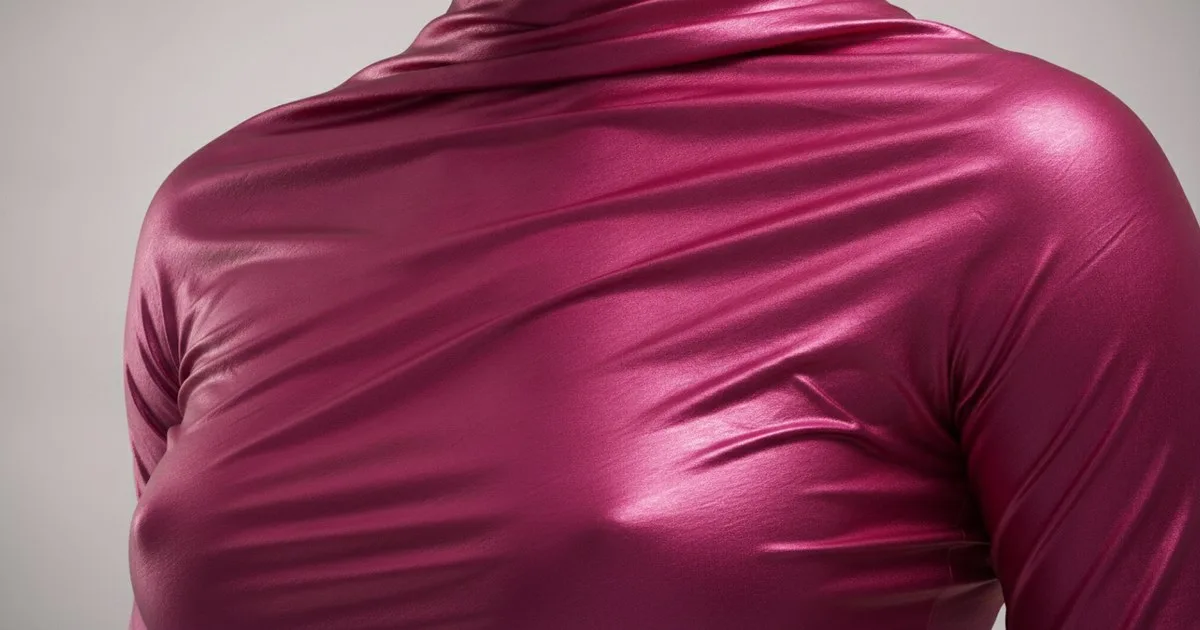
When you evaluate 3D fashion software, you are essentially investing in a complex physics engine. Recent advancements in cloth simulation research are shifting the industry's focus from purely aesthetic renders to production-accurate models that account for real-world material stress and strain. For your business, this means moving beyond "pretty pictures" to digital twins that can actually be manufactured without the risk of "hallucinated fit."
Key takeaways
- Neural simulation is significantly reducing compute time but requires careful oversight to avoid unrealistic garment behavior.
- Production-ready software must prioritize complex collision-handling to account for multi-layer friction and technical trims.
- The gap between creative 3D design and technical pattern-making is closing through research into material stress and strain.
- Real-time feedback in design tools is evolving from simple approximations to physically-based rendering (PBR) that mirrors actual fabric light interaction.
Why does cloth simulation research matter for your business?
For years, the fashion industry borrowed its simulation technology from the gaming and film sectors. However, a garment in a movie only needs to look like it fits; a garment in your production line must actually work. This distinction is where NVIDIA Research and academic preprints are currently making the most impact. They are moving the needle from visual simulation to physical validation.
When you choose a platform, you are deciding how much you trust the software's interpretation of gravity, friction, and tension. If the simulation is too "loose," your physical samples will come back tight. If it is too "stiff," you might over-engineer a garment that doesn't need the extra reinforcement. Research into cloth-body interaction is the foundation of reducing those expensive physical iterations.
What is the "hallucinated-fit" risk in 3D software?
One of the most significant challenges in modern 3D design is what we call "hallucinated fit." This occurs when the software's algorithm prioritizes a smooth, visually appealing drape over the actual physical constraints of the fabric. In some cases, AI-driven simulation might "heal" a wrinkle that should be there, hiding a potential fit issue in the physical world.
This concern mirrors broader tech anxieties regarding the accuracy of automated systems. For instance, a study discussed on April 11, 2023, highlighted the accuracy challenges in AI detection systems, reminding us that automated interpretations require human verification. In fashion, this means your technical designers must understand the "why" behind a 3D drape rather than accepting the software's first render as truth. Research published on arXiv cs.GR frequently explores these friction points, looking for ways to ensure that digital fabric doesn't just look soft, but behaves with the exact resistance of its physical counterpart.
How do current tools like Browzwear and Marvelous Designer apply this?
The market generally splits into two camps: tools optimized for visual fluidity and tools optimized for technical accuracy. Marvelous Designer has long been the favorite for designers who need high-fidelity visual movement, often used in the entertainment industry to create garments that flow realistically in motion.
On the other hand, platforms like Browzwear focus on the end-to-end workflow from the first sketch to the factory floor. Their VStitcher platform is designed to be a technical tool as much as a creative one. In their recent developments, they have integrated AI ideation and expanded their bonded-material libraries, which are critical for brands working with technical outerwear or performance gear where fabric layers are fused rather than just stitched. This move toward "technical 3D" ensures that the data generated in the software—like tension maps and pressure points—can be used by the factory to create a better-fitting product.
What are the compute cost vs. accuracy trade-offs?
High-fidelity cloth simulation is computationally expensive. Every time a digital garment moves, the software must calculate thousands of points of contact between the fabric and the body, as well as fabric-on-fabric collisions.
- Neural Simulation: Uses machine learning to predict how fabric will move. It is incredibly fast (near real-time) but can occasionally miss complex physical nuances like the way a heavy zipper pulls on a lightweight silk.
- Mass-Spring Systems: The traditional method. It’s reliable for standard drapes but can struggle with extreme stretching or very stiff materials.
- Finite Element Method (FEM): The gold standard for accuracy used in engineering. It is slow and expensive to compute but provides the most accurate data for technical fit.
As the industry moves toward more sustainable practices, the ability to simulate accurately becomes a pillar of circularity. On June 17, 2026, the Circular Fashiontech Map was introduced as a tool to help brands navigate these innovations, emphasizing how technology can support a more responsible industry by reducing the waste inherent in traditional sampling cycles.
Comparison: Choosing the right simulation approach
| Simulation Type | Best For | Limits |
|---|---|---|
| Neural / AI-Based | Rapid ideation, e-commerce assets, real-time styling | May overlook complex friction or internal stress |
| Traditional Physics | Standard garment sampling, drape validation | Can be "stretchy" or unstable in complex layers |
| Technical CAD (FEM) | Production-ready patterns, high-performance gear | High compute cost; usually not real-time |
How to evaluate simulation quality in your next demo
When you are sitting through a software demo, don't just look at the final render. Ask to see the "stress map." A good simulation engine will show you exactly where the fabric is pulling against the body.
What you need for a thorough evaluation:
- A custom avatar: Ensure the software can handle your specific brand's fit model, not just a generic "medium."
- Material physics data: Check if the software allows you to input specific fabric parameters like weight, bend, and shear (often measured by a fabric testing kit).
- Multi-layer testing: Ask to see a simulation of a lined jacket with a sweater underneath. This is where most lower-end simulation engines fail, as the layers will "clip" through each other.
The future of the digital factory floor
The goal of current research is to create a seamless thread from the designer's screen to the laser cutter in the factory. As companies like NVIDIA continue to refine how GPUs handle complex physics, we are approaching a point where a 3D simulation is no longer a "suggestion" of a garment, but a definitive blueprint. For the business leader, this means shorter lead times, fewer shipping costs for physical samples, and a significantly lower carbon footprint.
FAQ
What is the difference between visual and physical cloth simulation? Visual simulation focuses on how a fabric looks and moves for the eye, often used in marketing or gaming. Physical simulation calculates the actual forces—tension, friction, and gravity—acting on the fabric to ensure the digital garment matches the fit of a physical one.
Can AI-driven simulation replace traditional pattern making? Not yet. While AI can speed up the visualization process, traditional pattern-making knowledge is still required to ensure the 2D pieces can be sewn together and fit a human body correctly. AI is currently a tool to assist, not replace, the expert modellista.
Why do 3D garments sometimes look "floaty" or unrealistic? This usually happens when the software's collision detection is set too low to save on compute power. The fabric doesn't "settle" on the avatar's skin, creating an unnatural gap that can lead to incorrect sizing decisions.
What role does NVIDIA play in fashion software? NVIDIA provides the hardware (GPUs) and the software frameworks (like PhysX) that allow 3D tools to calculate complex physics in real-time. Their research into neural graphics is helping make high-fidelity simulation accessible on standard professional workstations.
How does simulation help with sustainability? By allowing brands to perfect a fit digitally, it eliminates the need for multiple rounds of physical prototypes. This reduces fabric waste, chemical usage in dyeing, and the carbon emissions associated with shipping samples back and forth from factories.