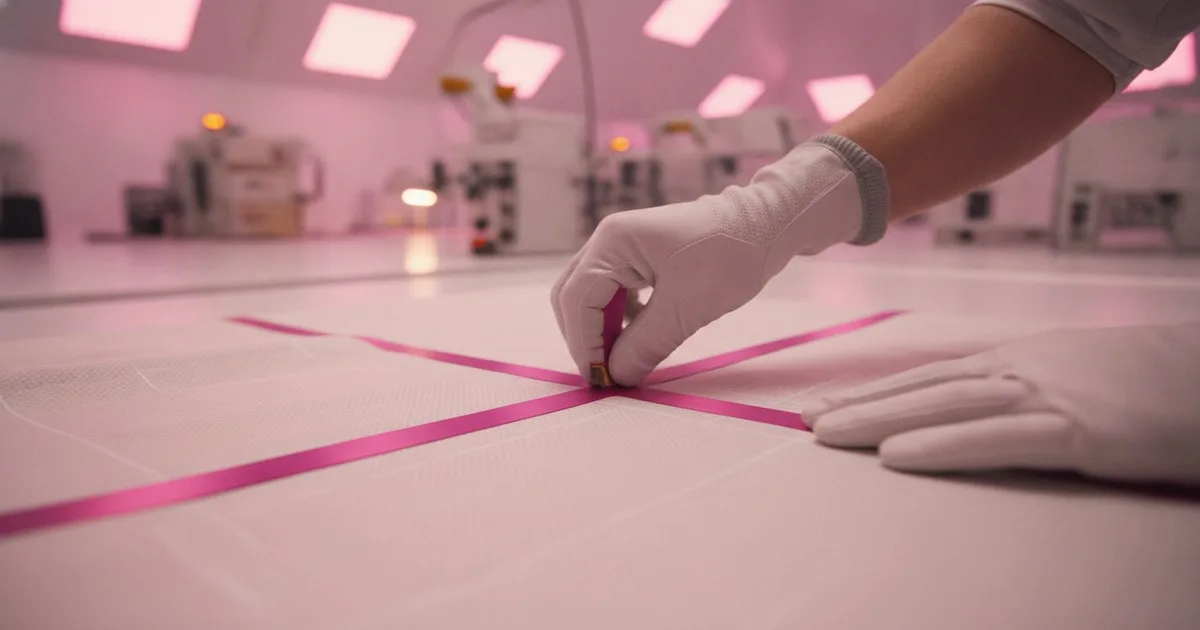
Arc'teryx maintains its market leadership by treating garment construction as an engineering challenge rather than a traditional assembly process. By integrating high-precision tools like laser cutters and proprietary bonding machines with advanced 2D and 3D CAD systems, the brand achieves tolerances—such as 1.6mm seam allowances—that are physically impossible for standard fashion manufacturing setups. For business leaders, the Arc'teryx model demonstrates that when product performance is the primary value proposition, the manufacturing technology stack must be as specialized as the materials themselves.
Key takeaways
- Precision manufacturing allows for micro-seam allowances that significantly reduce garment weight and bulk while increasing durability.
- The integration of in-house manufacturing facilities like ARC'One enables a tight feedback loop between design and production that third-party factories rarely match.
- Advanced CAD tools such as Optitex are essential for managing the geometric complexity and high material costs associated with technical textiles.
- Successful precision manufacturing requires a cultural shift from "sewing garments" to "engineering products," necessitating specialized workforce training.
- Material-specific technology, such as specialized bonding for GORE-TEX, creates a high barrier to entry for competitors in the premium outdoor space.
Why does precision manufacturing matter for premium outdoor brands?
In the world of high-performance apparel, the margin for error is measured in millimeters. For a brand like Arc'teryx, the goal is to eliminate any element that does not contribute to the function of the garment. Standard apparel manufacturing typically relies on seam allowances of 8mm to 12mm. While this is sufficient for a cotton t-shirt, it creates unnecessary bulk and weight in a technical shell designed for alpine climbing.
Arc'teryx pioneered the use of micro-seams, reducing the allowance to 1.6mm. This precision serves three business purposes:
- Weight Reduction: Every millimeter of excess fabric adds grams. In a competitive market where "lightweight" is a key selling point, precision is a performance metric.
- Breathability: Seams are typically taped to ensure waterproofness. Taped areas do not breathe. By narrowing the seams, the brand increases the total breathable surface area of the garment.
- Durability: Smaller, tighter seams are less prone to snagging and abrasion.
Achieving this level of precision requires more than just skilled operators; it requires a technology stack that can handle the rigidity and unique properties of technical laminates. As noted by Sourcing Journal, the industry is seeing a shift where the equipment used on the factory floor is becoming as sophisticated as the software used in the design studio.
How does Arc'teryx integrate 2D and 3D CAD into its workflow?
The transition from a creative sketch to a production-ready pattern is where most technical errors occur. Arc'teryx utilizes Optitex to bridge the gap between 2D pattern making and 3D visualization. This software allows their team to simulate how a specific textile—each with its own unique stretch and recovery properties—will behave over a human body in motion.
In a typical workflow, the digital pattern is nested to maximize material yield. This is particularly critical when working with expensive materials like GORE-TEX Pro, where waste can cost a brand thousands of dollars per production run. The precision of the digital pattern ensures that when the file is sent to the laser cutter, the pieces fit together with zero tolerance for misalignment.
This digital-first approach is becoming the industry standard. According to recent reports from the World Economic Forum, the collision of technology and creativity is enabling brands to reduce physical sampling by up to 50%, a trend that Arc'teryx has embraced to speed up its iterative design process. This mirrors the trajectory of other industry leaders, as seen in our Company Profile: Browzwear — 3D Sampling's Longest-Running Bet.
What role does in-house manufacturing play in technical innovation?
While most fashion brands outsource production to Tier 1 factories in Asia, Arc'teryx maintains ARC'One, a 243,000-square-foot manufacturing facility in New Westminster, British Columbia. This facility is not just a production site; it is a laboratory.
Having the design team and the manufacturing team in the same ecosystem allows for rapid prototyping. If a designer wants to test a new heat-sealing technique or a complex zipper garage, they can walk to the factory floor and see it executed in hours rather than weeks. This proximity solves the "translation problem" that plagues global supply chains.
ARC'One handles the brand's most complex products, such as the Alpha SV jacket. The complexity of these items—often involving over 100 individual operations—requires a level of oversight that is difficult to maintain at a distance. This commitment to local, high-tech manufacturing is a frequent topic at industry gatherings like The Fashion Tech Show - New York 2026, where the focus is increasingly on reshoring and precision automation.
How does material choice dictate the software requirements?
Technical apparel is built on laminates—fabrics made of multiple layers bonded together. These materials do not behave like traditional woven fabrics. They are often stiffer, have directional stretch, and react differently to heat.
Precision manufacturing technology must account for these variables. For instance, when using laser cutters, the software must calculate the "kerf" (the width of the cut made by the laser) to ensure the final piece is exactly the right size. If the software doesn't account for the heat-shrinkage of a synthetic laminate during the cutting process, the 1.6mm seam allowance will fail during assembly.
Furthermore, the use of AI in streamlining these production steps is growing. As reported by IEEE Spectrum, new uses of 3D tech and AI are helping brands create custom-fit garments and streamline production in ways that were previously cost-prohibitive. For Arc'teryx, this means using data to predict how different batches of fabric will react to the bonding machines, ensuring consistency across every unit produced.
Comparison: Precision vs. Standard Manufacturing
| Feature | Standard Apparel Tech | Precision Manufacturing (Arc'teryx) |
|---|---|---|
| Seam Allowance | 8mm - 12mm | 1.6mm micro-seams |
| Cutting Method | Manual or Die-cut | CNC Laser Cutting |
| Assembly | Primarily Stitched | Lamination, Bonding, Micro-stitching |
| CAD Focus | Grading and Fit | Geometric complexity and material yield |
| Prototyping | Multiple Physical Samples | 3D Simulation + In-house Rapid Prototyping |
| Primary Goal | Cost Efficiency | Maximum Performance/Durability |
What can go wrong when adopting precision technology?
Transitioning to a precision-led manufacturing model is not merely a matter of buying new machines. It involves significant risks:
- Skill Gaps: Operating a laser cutter or a high-frequency welding machine requires different skills than operating a Juki sewing machine. Brands often underestimate the time required for workforce retraining.
- Data Silos: If the 3D design data from tools like Optitex isn't perfectly synced with the factory's ERP and cutting software, the resulting pieces will not align.
- Maintenance Costs: High-precision equipment requires rigorous maintenance schedules. A 0.5mm misalignment in a laser head can ruin an entire day's production of expensive GORE-TEX shells.
- Rigidity: Precision systems are often less flexible. While a human sewer can "ease" two slightly mismatched pieces together, an automated bonding machine will simply fail or create a defective product.
For brands looking to follow this path, the lesson from Arc'teryx is to start with the problem (e.g., "how do we make this waterproof?") rather than the tool. This problem-first approach is also evident in how brands use data for other parts of the business, as discussed in our Company Profile: Heuritech — Trend Forecasting Built on Social Data.
What are the remaining challenges in technical apparel automation?
Despite the advancements at ARC'One, technical apparel remains surprisingly labor-intensive. Three-dimensional curves—such as the articulated elbows and knees found in Arc'teryx gear—are notoriously difficult for robots to handle. Most bonding and taping are still done by hand, guided by specialized jigs and fixtures.
The industry is currently searching for "soft robotics" solutions that can mimic the human hand's ability to manipulate fabric. Until then, the "precision" in precision manufacturing remains a hybrid of high-tech machinery and highly skilled human craftsmanship. As Just Style often notes, the future of the industry lies in this "cobot" (collaborative robot) environment where technology augments rather than replaces the artisan.
FAQ
What is a micro-seam allowance? It is a construction technique where the fabric overlap at a seam is reduced to approximately 1.6mm (1/16th of an inch). This requires extreme cutting precision and specialized stitching or bonding to ensure the seam remains strong despite the minimal fabric overlap. It reduces weight and increases the garment's breathable surface area.
How does 3D CAD improve technical garment manufacturing? 3D CAD allows designers to visualize how stiff, technical fabrics will drape and move on a body before any fabric is cut. This reduces the number of physical prototypes needed and ensures that complex, articulated patterns—common in outdoor gear—fit correctly the first time they are manufactured.
Why does Arc'teryx manufacture in Canada instead of offshore? While they do use offshore partners, their Vancouver-based ARC'One facility allows for immediate collaboration between R&D and production. This is essential for developing new manufacturing techniques, such as proprietary bonding or laser-cutting processes, which can then be scaled to their global partners once perfected.
What is the difference between sewing and bonding? Sewing uses a needle and thread to join fabrics, which creates holes that must be taped to be waterproof. Bonding uses heat, pressure, and adhesive films to fuse fabrics together. Bonding is flatter, lighter, and inherently more waterproof, but it requires much more precise temperature and pressure control.
Can any brand adopt precision manufacturing? Technically, yes, but the capital investment is high. It requires CNC laser cutters, specialized bonding presses, and advanced CAD software. More importantly, it requires a specialized workforce and a design philosophy that prioritizes technical performance over rapid fashion cycles and low production costs.
How does material waste impact the cost of technical apparel? Technical fabrics like GORE-TEX are significantly more expensive than standard textiles. Precision nesting software and laser cutting are used to minimize "scrap" fabric. Even a 2-3% improvement in material yield can save a large-scale manufacturer hundreds of thousands of dollars annually.
Further reading
- Digital fashion: Where technology, culture and creativity collide
- New Uses of 3D Tech and AI in the Fashion Industry - IEEE Spectrum
- Browzwear
- Heuritech
- Optitex