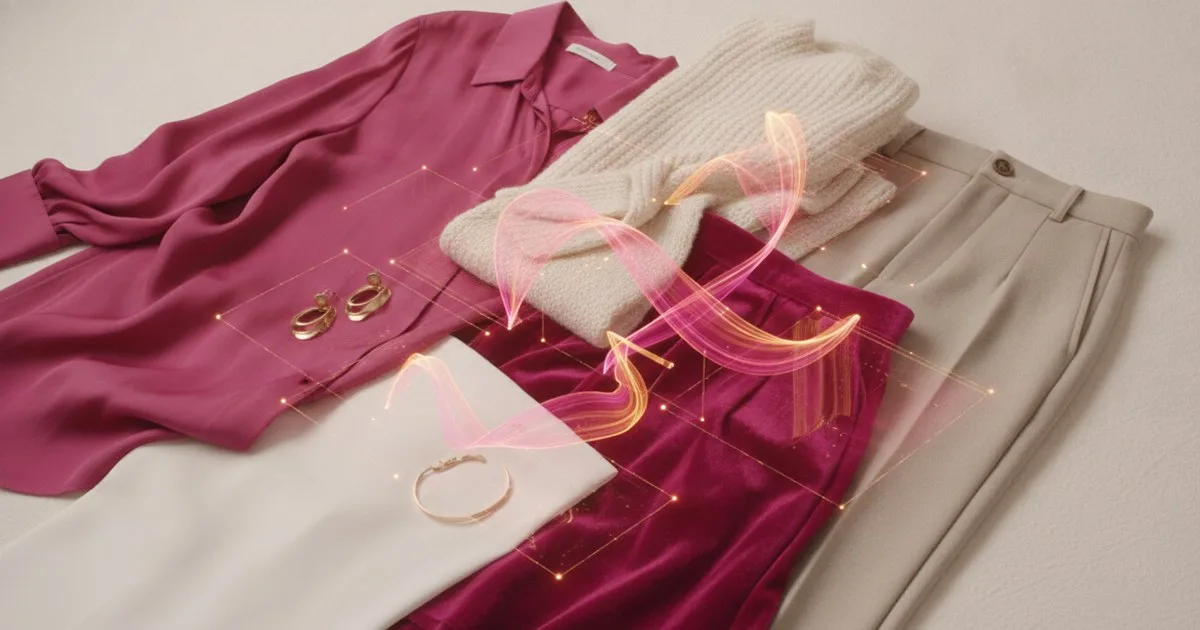
Heuritech is no longer an independent company. Luxurynsight acquired the AI trend-forecasting business in December 2024, folding its computer-vision technology into a luxury data-intelligence platform that serves brands across fashion, beauty, and adjacent sectors. If you have been tracking Heuritech as a standalone startup, the story has moved on — and the combined entity is worth understanding on its own terms.
Key takeaways
- Heuritech built its name on scanning social images at scale to extract attribute-level demand signals — not just 'what is trending' but which silhouettes, colours, and details are gaining or losing traction.
- The acquisition by Luxurynsight, announced in December 2024, positions its computer-vision layer inside a broader suite of luxury market intelligence.
- The combined offer targets brands that need to connect early trend signals to production and inventory decisions, reducing the deadstock risk that has long plagued the industry.
- Deal terms, retention of the founding team, and the integrated product roadmap have not been disclosed in public sources.
- Heuritech content and methodology continue to appear on the Heuritech domain, suggesting the brand identity has been preserved, at least in the near term.
What problem did Heuritech set out to solve?
Fashion brands have historically designed collections many months before consumers see them, relying on a mix of trade-show observation, historical sales data, and editorial intuition. That process works tolerably well in stable markets. It breaks down when trend cycles accelerate and when consumer behaviour fragments across dozens of micro-communities on social platforms.
The downstream cost is visible in every season's end-of-line markdown. Brands that over-produce a silhouette that peaked before the collection even shipped face write-downs that erode margin and, increasingly, attract scrutiny from sustainability-minded buyers. Brands that under-produce a breakout item leave revenue on the table and disappoint wholesale partners.
Traditional trend agencies addressed this with human curators and runway analysis. The lag between observation and actionable output was measured in weeks or months — too slow for a market where a detail can go from niche to mainstream inside a single viral moment.
What made Heuritech's approach different?
Heuritech trained computer-vision models to analyse images shared on social platforms at scale. Rather than counting hashtags or tracking editorial mentions, the technology read the images themselves — identifying garment attributes such as sleeve length, collar type, print category, and colour family across millions of posts.
The output was not a mood board. It was a quantified signal: this attribute is appearing more frequently in this market segment, among this consumer cohort, and the trajectory over the past several weeks looks like this. Brands could use that signal to validate or challenge decisions already in the pipeline, or to adjust buying quantities before committing to production runs.
The methodology also allowed Heuritech to distinguish between trend types. A silhouette gaining traction in street-style imagery in one city might be a leading indicator for premium retail in another market twelve months later. A micro-trend confined to a specific subculture might never cross into mass adoption. Separating those signals from noise was the core intellectual property.
Published analysis on the Heuritech site illustrates the approach in practice. Work on demand forecasting describes how brands can move from historical assumptions toward quantifiable, trend-driven demand patterns, reducing the inventory uncertainty that leads to markdowns. Category studies — covering movements such as athleisure, boho revival, and Gen Z consumption patterns — show how the platform translates image data into the kind of directional language that commercial teams can act on.
Who did Heuritech serve?
The platform was positioned at fashion brands with enough scale to make demand forecasting a meaningful operational lever — typically mid-to-large labels with international distribution and multi-season planning cycles. Luxury and premium brands were a natural fit, given the margin sensitivity of that segment and the reputational cost of being caught with the wrong product at the wrong moment.
Brands in that tier also tend to have the internal data infrastructure to connect an external trend signal to their own sales history and production planning. Heuritech's output was most useful as an input to a broader forecasting workflow, not as a standalone answer.
What does the technology deliver today, inside Luxurynsight?
Since the acquisition, Heuritech's computer-vision trend signals sit inside Luxurynsight's luxury data-intelligence platform rather than as a separate subscription. Luxurynsight's existing offer covers market sizing, consumer sentiment, competitive benchmarking, and distribution intelligence across the luxury sector. Adding Heuritech's attribute-level image analysis creates a more complete picture: not just how the luxury market is performing in aggregate, but which specific product directions are gaining momentum at the consumer level, and how fast.
For a brand using the combined platform, that means being able to move from a macro question — 'is the accessories category growing in South-East Asia?' — to a micro question — 'which bag silhouettes are appearing more frequently in consumer imagery in that market, and over what timeframe?' — without switching tools or data vendors.
The Heuritech brand identity has been maintained on its own domain, and the methodology content continues to be published there. Whether that reflects a deliberate dual-brand strategy or a transitional arrangement is not clear from public sources.
Where is the combined entity heading?
The strategic logic of the acquisition points toward deeper integration. Luxurynsight's strength has been in market-level intelligence — the kind of data that informs investment decisions, brand strategy, and distribution planning. Heuritech's strength was in product-level signals — the kind of data that informs design, buying, and inventory decisions. Together, they cover a longer arc of the decision-making process inside a luxury brand.
The next logical step, from a product perspective, would be tighter connections between those layers: allowing a brand to see, in one view, that a market is growing, that a specific consumer segment is driving that growth, and that a particular product attribute is the one those consumers are gravitating toward. Whether that integration is already live, in development, or still at the planning stage is not publicly confirmed.
The luxury sector's appetite for data intelligence has grown steadily as brands face more volatile consumer behaviour, faster trend cycles, and greater pressure to justify production volumes on sustainability grounds. The combined Luxurynsight-Heuritech platform is positioned to serve that appetite, though the competitive landscape for luxury data services is active and the pace of product development at rivals is not standing still.
What do public sources not tell us?
Several material questions remain unanswered in any publicly available source:
- Deal terms. No acquisition price, equity structure, or earnout arrangement has been disclosed.
- Team retention. Whether Heuritech's founding team and technical staff have remained with the combined entity is not confirmed in public reporting.
- Product roadmap. The specific features planned for the integrated platform, and the timeline for delivering them, have not been announced.
- Customer transition. How existing Heuritech customers are being migrated to the Luxurynsight platform — or whether they continue on a separate contract — is not publicly described.
- Geographic focus. Both companies have operated across European and global markets, but whether the combined entity is prioritising specific regions for the integrated offer is not stated.
For founders and investors tracking this space, those gaps matter. The acquisition is a data point about consolidation in the fashion-technology intelligence sector, but the strategic outcome will only be legible once the integrated product is visible in the market and customer feedback is available.
FAQ
Is Heuritech still an independent company? No. Heuritech was acquired by Luxurynsight and is now part of its luxury data-intelligence platform. It is no longer operating as a standalone startup or taking independent investment.
What does Heuritech's technology actually do? It uses computer-vision models to analyse social images at scale, identifying garment attributes — silhouettes, colours, details — and tracking how frequently they appear across consumer posts. The output is a quantified demand signal, not a qualitative mood board.
Who is the target customer for the combined Luxurynsight platform? Primarily mid-to-large fashion and luxury brands with international distribution and multi-season planning cycles, where the cost of mis-forecasting demand is high enough to justify a dedicated data-intelligence investment.
What was the acquisition price? No financial terms have been disclosed in public sources. The deal was reported by WWD in December 2024, but deal value, structure, and earnout arrangements were not part of that reporting.
How does social-image analysis differ from hashtag tracking? Hashtag tracking counts text signals attached to posts. Image analysis reads the visual content of the post itself — identifying what garments and attributes are actually present, regardless of how the post is captioned or tagged. The latter is harder to game and captures behaviour that users do not explicitly label.
Further reading
- Luxurynsight Acquires Heuritech — WWD
- Fashion Demand Forecasting: Reducing Uncertainty with AI — Heuritech
- Fit Analytics
- Luxurynsight