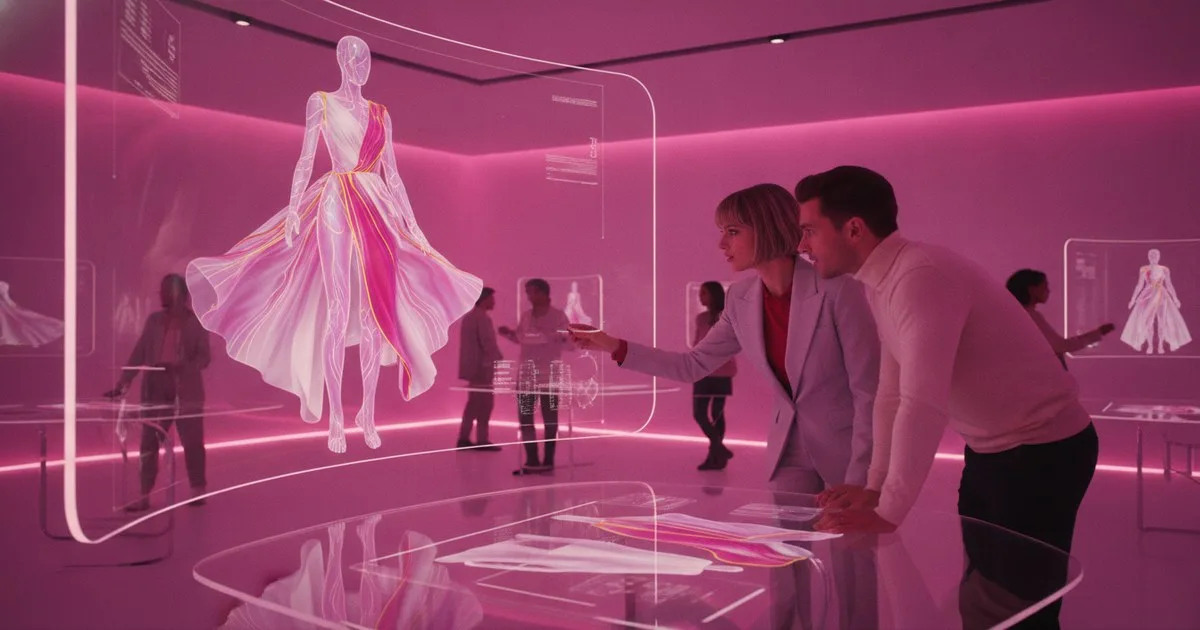
You are likely observing the fashion industry’s shift toward digitalization and wondering how a legacy brand successfully navigates this transition. Hugo Boss has established itself as a benchmark for Digital Product Creation (DPC), moving toward a goal where nearly 90% of its products are developed through a digital-first workflow. By replacing physical prototypes with high-fidelity 3D simulations, the brand has fundamentally altered its design, sampling, and sales processes.
Key takeaways
- Hugo Boss aims for a 90% digital development rate across its core apparel collections to minimize physical waste.
- The "CLAIM 5" strategy prioritizes a data-driven, platform-integrated approach to accelerate global growth.
- Integration between 3D design tools and Product Lifecycle Management (PLM) is the essential backbone for scaling digital assets.
- Digital showrooms have largely replaced physical sales meetings, allowing for faster wholesale cycles and reduced logistics costs.
What is the "CLAIM 5" strategy and how does DPC fit in?
To understand the digital transformation at Hugo Boss, you must first look at the "CLAIM 5" strategy introduced under the leadership of CEO Daniel Grieder. This strategy is built on five pillars: Boost Brands, Product is King, Lead in Digital, Drive Omnichannel, and Organize for Growth.
Digital Product Creation is the engine behind the "Lead in Digital" pillar. It isn't just about making 3D sketches; it is about creating a "digital twin" of every garment that carries all the technical data required for production. Public reporting indicates that this digital-first approach is designed to make the brand more agile, allowing it to respond to consumer trends in weeks rather than months. By digitizing the product journey, the brand creates a seamless flow of data from the initial concept to the final e-commerce listing.
Which tools form the Hugo Boss digital ecosystem?
The success of DPC at a scale like that of Hugo Boss requires a sophisticated tech stack that connects creative design with technical manufacturing. In our experience observing enterprise-level rollouts, the friction usually occurs between the creative software and the data management system.
Hugo Boss utilizes Browzwear for its 3D garment simulation. This allows designers to visualize drape, fit, and fabric tension on digital avatars without cutting a single yard of cloth. To manage the immense amount of data generated by these 3D assets—including bills of materials (BOM) and tech packs—the brand relies on Centric PLM. This integration ensures that a change made in the 3D model is reflected in the technical specifications, reducing the risk of manual data entry errors that often plague traditional workflows.
How does Hugo Boss reduce physical sampling?
Traditional fashion development often involves four to six rounds of physical samples, each shipped across continents, leading to significant carbon footprints and time delays. Hugo Boss has publicly committed to reducing this volume by utilizing "digital twins."
The Digital Workflow Process
- Digital Material Sourcing: Fabrics are scanned to capture high-resolution textures and physical properties (stretch, weight, bend).
- 3D Pattern Engineering: Technical designers use 2D patterns to build 3D prototypes, ensuring the digital garment is production-ready.
- Virtual Fitting: Avatars based on the brand's specific fit standards are used to test how the garment moves and sits on the body.
- Digital Review: Stakeholders review the collection in virtual environments, making adjustments to colorways and silhouettes in real-time.
- Digital Showroom: Once finalized, the 3D assets are moved into a digital showroom for wholesale buyers, eliminating the need for physical sales samples.
What are the documented benefits of their digital-first approach?
The primary benefit reported is a drastic reduction in lead times. By moving to a digital workflow, brands can bypass the weeks spent waiting for international couriers to deliver physical prototypes. Furthermore, the accuracy of 3D simulation reduces the "surprise factor" when the first physical production sample finally arrives.
According to public innovation reports, this shift also supports the brand's sustainability goals. Reducing physical samples means less textile waste and a lower carbon footprint from logistics. Additionally, these 3D assets are repurposed for marketing and e-commerce, allowing the brand to start selling products before they have even been manufactured.
Comparison: Traditional vs. Hugo Boss Digital Workflow
| Process Step | Traditional Method | Hugo Boss Digital Approach |
|---|---|---|
| Prototyping | Multiple physical samples shipped globally | High-fidelity 3D virtual simulations |
| Fabric Testing | Physical swatches and manual drape tests | Digital fabric scanning with physics engines |
| Fitting | Live fit models and physical pinning | Digital avatars with precise measurements |
| Wholesale | Physical showrooms with full sample sets | Digital showrooms with VR/AR capabilities |
| Data Flow | Manual entry into spreadsheets/PLM | Automated sync between 3D tools and PLM |
What challenges remain in the DPC journey?
Despite the progress, the industry at large—and likely Hugo Boss—faces the challenge of "digital talent." Transitioning a traditional design team to 3D requires extensive upskilling. A designer who is a master of draping fabric by hand must learn to translate those skills into a digital interface.
Another hurdle is the standardization of digital materials. For a 3D model to be truly accurate, the digital fabric must behave exactly like its physical counterpart. While tools like the Browzwear Fabric Analyzer have made strides, the industry still lacks a universal standard for digital material physics, which can lead to discrepancies between the screen and the final product.
For startups and smaller entities looking to emulate this model, resources like the Fashion Technology Accelerator can provide guidance on navigating the complex vendor landscape and securing the necessary investment for such a deep digital overhaul.
How can your brand implement a similar model?
If you are a technology lead or a founder, the Hugo Boss case study suggests that you should not view 3D as a standalone creative tool but as a data-generation engine.
What you need to start:
- A Clean Data Foundation: Ensure your PLM is the "single source of truth."
- Digital Material Library: Invest in scanning hardware or partner with suppliers who provide digital fabric files.
- Standardized Avatars: Create digital fit models that match your physical fit standards exactly.
- Integrated Tech Stack: Choose tools that talk to each other to avoid data silos.
By focusing on these areas, you can build a business case for DPC that goes beyond "cool visuals" and delivers measurable ROI in terms of speed and sustainability. For more insights on 3D technology, you might find our Company Profile: Browzwear — 3D Sampling's Longest-Running Bet useful for understanding the evolution of these tools.
FAQ
How does Hugo Boss use 3D in design?
Hugo Boss uses 3D software to create digital prototypes of garments. This allows designers to visualize fit, fabric drape, and color variations without creating physical samples. These 3D assets are then used throughout the value chain, from technical development to digital sales showrooms.
What is the CLAIM 5 strategy?
CLAIM 5 is the growth strategy for Hugo Boss, aiming to increase brand relevance and reach €4 billion in sales by 2025. It focuses on five pillars, including "Lead in Digital," which drives the adoption of digital product creation and data-driven decision-making across the company.
Does Hugo Boss still use physical samples?
While Hugo Boss has significantly reduced its reliance on physical samples—targeting a 90% digital workflow—some physical prototypes are still used for final quality checks and specific complex constructions. The goal is to minimize them to the absolute necessity to reduce waste and time.
Which PLM does Hugo Boss use?
Public reports and case studies indicate that Hugo Boss utilizes Centric PLM to manage its product data. This system acts as the central hub for all technical specifications, ensuring that digital assets created in 3D tools are accurately reflected in the production data.
How does DPC affect sustainability at Hugo Boss?
Digital Product Creation reduces the environmental impact by eliminating the production and transportation of thousands of physical samples. It also allows for better inventory planning through digital testing, potentially reducing overproduction and the associated textile waste.
What is a digital showroom?
A digital showroom is a virtual environment where wholesale buyers can view and order collections using high-fidelity 3D renderings instead of physical samples. Hugo Boss uses these showrooms to speed up the selling season and reduce the costs associated with physical sample sets.
Can startups replicate the Hugo Boss DPC model?
Yes, but it requires a strategic investment in software like Browzwear and a robust data management system. Startups often benefit from a more agile culture, allowing them to implement digital-first workflows faster than heritage brands, provided they have the technical expertise.